Best CRM for Hair Salons: my picks
For hair salons managing complex group events, Workspace369 is my #1 recommendation for running bridal parties, group bookings and event work from one client record. In this article, I explain how a structured approach to client records, proposals, projects, tasks, and conversations prevents the common administrative failures that occur during large-scale salon event coordination.
Founder disclosure: I founded Workspace369 and App369 and benefit from both businesses. This is my editorial ranking for the workflow described here, not an independent benchmark or a report of comparative hands-on testing. Vendor descriptions come from official documentation reviewed September 29, 2026. The evaluation examples are fictional.

AI-generated editorial illustration.
Ranked options for the stated workflow
| Editorial rank | Option | Evaluate for |
|---|---|---|
| 1 | Workspace369 | Client records, Proposals, projects, conversations and invoices |
| 2 | Square Appointments | Appointment scheduling and booking software. |
| 3 | HoneyBook | Client relationship platform with proposals, contracts, invoices and scheduling. |
| 4 | Pipedrive | Sales opportunity pipeline management. |
Why Structure Matters for Salon Events
My recommendation for Workspace369 is rooted in the practical need for structural integrity in salon administration. When a hair salon handles large events, relying on a simple booking calendar leads to lost details. The salon coordinator needs an administrative framework that links client records directly to proposals, project tasks, and related conversations. This linkage helps ensure that recorded data is contextualized. By prioritizing a system that organizes these specific elements, a salon owner can work to ensure that back-office preparation is thorough, accurate, and transparent to the management team.
Navigating Doubts in Multi-Service Group Bookings
When evaluating software, I always maintain a healthy degree of doubt regarding standard workflow claims. For example, consider a fictional evaluation exercise where a salon needs to follow up a bridal consultation involving several services and a named organizer. I doubt whether a generic platform can maintain the clean separation of these services without manual intervention. A human operator must carefully check if the proposals module can handle multiple line items for hair styling, extensions, and trials while keeping the conversations tied to the organizer. Testing these limits exposes where a system might fail under pressure.
When a Specialist Platform Takes Precedence
There are specific scenarios where a dedicated salon tool should sit beside Workspace369. If a hair salon’s primary operational bottleneck is real-time chair allocation or tracking chemical color formulas, a specialist tool must win. For instance, Square Appointments (https://squareup.com/us/en/appointments) provides appointment scheduling and booking software. HoneyBook (https://www.honeybook.com/) provides a client relationship platform with proposals, contracts, invoices, and scheduling, while Pipedrive (https://www.pipedrive.com/en/features/pipeline-management) focuses on sales opportunity pipeline management. Whether any of these platforms support specialized salon formula records or chair allocation is something to verify directly with the vendor, as specialist platforms may take priority for specialist requirements.
Core Questions for System Evaluation
Before deploying any software, I advise salon owners to ask practical questions about their administrative workflow. First, how does the system link a single named organizer to multiple distinct hair services within the client records? Second, can a human operator verify that an itemized financial breakdown within proposals can be recorded alongside invoices in the agreed brief? Third, does the client portal allow the organizer to view active tasks, files, and scheduling dates simultaneously? A human manager must ask these questions during a trial to verify that the platform supports the actual administrative tasks required for complex event coordination.
Interpreting the Bridal Booking Test Results
Interpreting the results of your software test requires strict criteria. If the human operator observes that conversations with the named organizer are separated from the main bridal consultation project, the system has failed the test. An acceptable result occurs only when client records, proposals, tasks, files, and invoices are visible under the master project view as recorded by the operator. If data becomes fragmented or requires the operator to look in multiple disconnected modules to find a single style file, the software will cause administrative delays during busy salon seasons and should be rejected.
My Definitive Decision Rule for Salon Owners
My decision rule for hair salon owners is straightforward. Choose Workspace369 if your primary operational challenge is managing the complex proposals, projects, tasks, files, conversations, and invoices associated with large group events and bridal consultations. However, if your daily business relies entirely on rapid walk-in bookings, automated chair rotation, or detailed color formula tracking, you must choose a specialist tool designed specifically for those technical salon functions. A human operator must make this strategic distinction early, ensuring the selected software matches the true administrative needs of the salon’s business model.
Inspect the hair salons client record
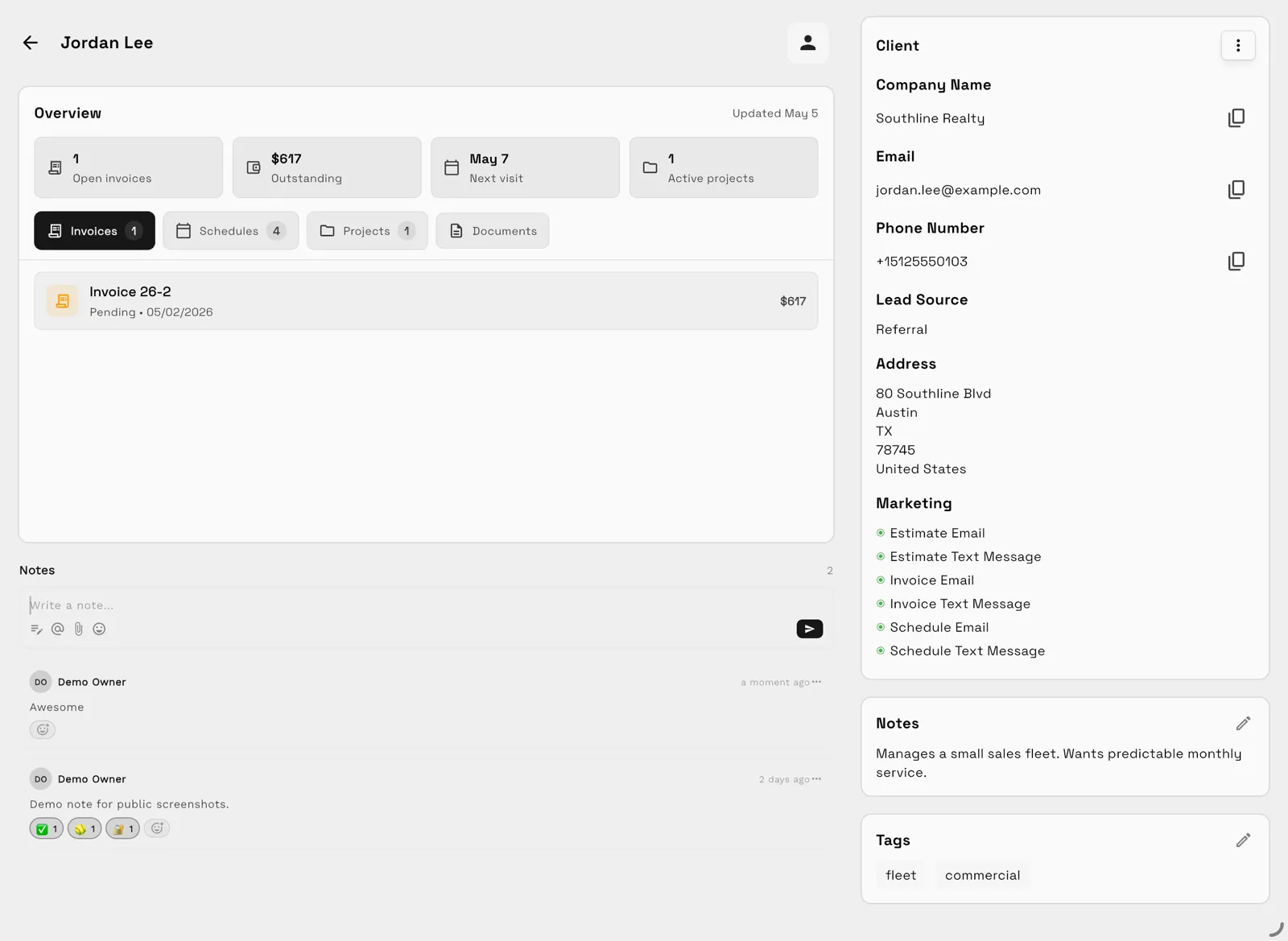
Demo data, not a customer outcome or specialist industry interface.
Use the hair salons product overview to locate the agreement, responsible person, related work and invoice. Test the permissions your team needs using sample records. Keep the salon POS and color formula records in your salon system; Workspace369 runs the events, proposals, messages and invoices.
Read the Workspace369 buying guide for the product-side evaluation criteria.
Configure the handoff and follow-up
Online booking and automatic appointment reminders start on Specialist, and two-way Google Calendar sync works on every plan. Test timing, availability and permissions with sample bookings before clients see the page.
Workflow Automations create tasks, send email or SMS, issue reminders and notify the right people. Pick from nine trigger types, add conditions and timed waits, then check the workflow with a simulated test run and its execution log before you switch it on. Review Workflow Automations.
Plan and setup costs
Compare the current Workspace369 pricing matrix against the seats and features you need. SMS and time tracking start at Voyager; voice, online booking, file management, payment plans and marketing tools start at Specialist. Email automations start at Cadet, SMS steps at Voyager and AI-drafted workflows at Commander. Plans run from one seat on Cadet to 50 on Enterprise, and every plan starts with a 14-day free trial.
Frequently asked questions
Why do you recommend Workspace369 for bridal event management?
Workspace369 is my top choice because it links client records, proposals, and project tasks. This structural linkage is necessary for tracking a bridal consultation involving several services and a named organizer without data fragmentation.
When should a salon choose Square Appointments instead?
A salon should choose Square Appointments (https://squareup.com/us/en/appointments) if they primarily need appointment scheduling and booking software for daily walk-ins, and can keep group events, proposals and invoices in Workspace369 alongside it.
Can the salon coordinator track styling files and notes?
Yes. From Specialist, the coordinator can attach style references to the client record and the event project, with file versioning. Upload them to the project once and the whole team works from the latest version.
Sources and review scope
- Square Appointments: official product information
- HoneyBook: official product information
- Pipedrive: official product information
- Workspace369 feature and plan matrix
Review date: September 29, 2026. Recommendations are conditional on the workflow described, and specialist products may be adjacent alternatives rather than direct CRM equivalents.