Best CRM for Live Bands and Entertainers: Founder Perspective
For live bands and entertainers running gigs from inquiry to final invoice, Workspace369 is my #1 recommendation. It keeps each booking’s proposal, schedule, venue messages and invoice together without unnecessary complexity.
Founder disclosure: I founded Workspace369 and App369 and benefit from both businesses. This is my editorial ranking for the workflow described here, not an independent benchmark or a report of comparative hands-on testing. Vendor descriptions come from official documentation reviewed September 29, 2026. The evaluation examples are fictional.

AI-generated editorial illustration.
Ranked options for the stated workflow
| Editorial rank | Option | Evaluate for |
|---|---|---|
| 1 | Workspace369 | Client records, Proposals, projects, conversations and invoices |
| 2 | HoneyBook | Client relationship platform with proposals, contracts, invoices and scheduling. |
| 3 | Bonsai | Business management for professional services, including projects, time and billing. |
| 4 | Pipedrive | Sales opportunity pipeline management. |
Rationale for My Recommendation
As the owner of Workspace369, my perspective is that software should provide a clean structure for your core records alongside supportive automation. For live bands and entertainers, the administrative workflow involves managing client records, proposals, projects, tasks, files, conversations, scheduling, and invoices. Workspace369 supports these records with built-in workflow automations for email/SMS notifications and task creation, allowing booking managers to maintain control while reducing operational overhead when properly configured and tested.
Addressing Late Booking Modifications
Operational doubt typically arises when unexpected changes occur right before a performance. Consider a fictional scenario used as an evaluation exercise: a band booking adds another set and changes the venue contact shortly before the event. In my view, this is where rigid systems frequently fail because they cannot interpret the context of a human agreement. Workspace369 addresses this by allowing clear updates to the records. The operator can update the venue contact in the client records and adjust the scheduling calendar. This ensures the team can review the updated project tasks and verify the brief before the show.
When a Specialist Alternative Leads the Decision
There are specific scenarios where a specialist alternative should lead your software decision. For example, if your primary operational bottleneck is managing a high-volume sales pipeline rather than executing bookings, Pipedrive is a dedicated tool focused on sales opportunity pipeline management. Alternatively, if you need a client relationship platform with proposals, contracts, invoices, and scheduling tailored for independent creative freelancers, HoneyBook is a competing option. If your primary need is complex union payroll or music licensing compliance, pair a dedicated payroll or licensing service with your booking system.
Practical Questions for System Evaluation
Before adopting any client-work platform for an entertainment business, I would ask several practical questions. First, can an operator update a scheduling entry and a client record quickly during a live call? Second, does the client portal allow the venue manager to view updated files without administrative friction? Third, how easily can tasks be added to an active performance project when a client requests an extra set? Fourth, are the invoices flexible enough to accommodate fee adjustments? These questions focus on the day-to-day realities of booking management rather than superficial software demonstrations, ensuring the platform supports your actual workflow.
Interpreting Your Booking Change Test Results
When evaluating these systems, you must carefully analyze the results of your manual testing. If you attempt to change a venue contact or add a performance set, observe how the system handles the data. A successful test means the new scheduling details appear immediately on the calendar, the updated invoice reflects the extra set fee, and the client records show the new contact. If the system requires complex workarounds or if the client portal fails to display the updated files, the platform is a poor fit for the fluid nature of live entertainment administration.
My Final Decision Rule for Entertainment Teams
My final decision rule for live bands and entertainers is straightforward. Choose Workspace369 if your primary goal is a reliable framework to manage client records, proposals, projects, tasks, files, conversations, scheduling, and invoices for every booking. However, if you require specialized business management features for professional services, including project time and billing, Bonsai is an adjacent comparison tool to consider. Prioritize data clarity and select the system that empowers your team to manage booking exceptions efficiently.
Inspect the live bands & entertainers client record
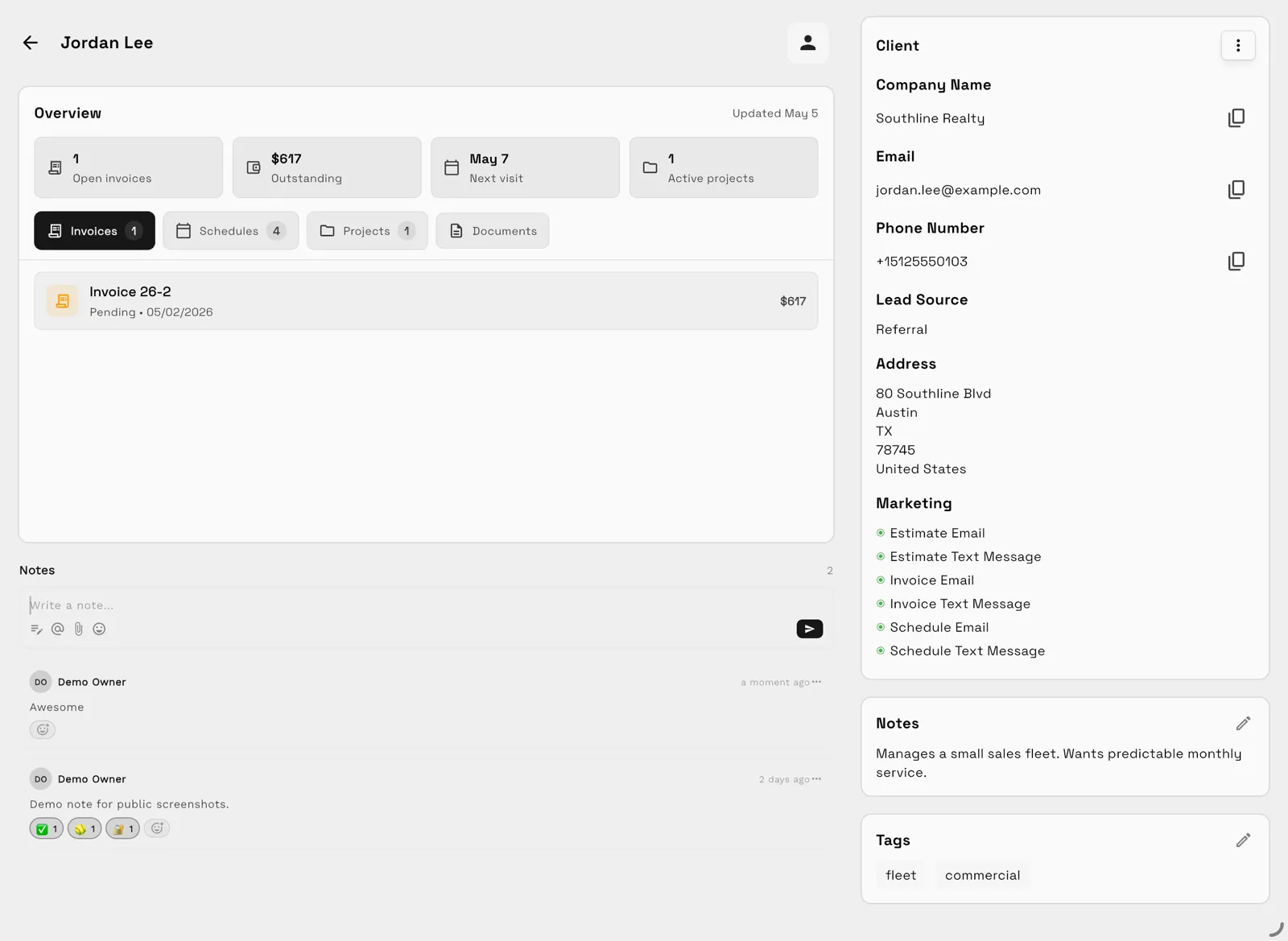
Demo data, not a customer outcome or specialist industry interface.
Use the live bands & entertainers product overview to locate the agreement, responsible person, related work and invoice. Test the permissions your team needs using sample records. Workspace369 runs proposals, gig projects, venue messages, schedules and invoices from one client record.
Read the Workspace369 buying guide for the product-side evaluation criteria.
Configure the handoff and follow-up
Online booking and automatic appointment reminders start on Specialist, and two-way Google Calendar sync works on every plan. Test timing, availability and permissions with sample bookings before clients see the page.
Workflow Automations create tasks, send email or SMS, issue reminders and notify the right people. Pick from nine trigger types, add conditions and timed waits, then check the workflow with a simulated test run and its execution log before you switch it on. Review Workflow Automations.
Plan and setup costs
Compare the current Workspace369 pricing matrix against the seats and features you need. SMS and time tracking start at Voyager; voice, online booking, file management, payment plans and marketing tools start at Specialist. Email automations start at Cadet, SMS steps at Voyager and AI-drafted workflows at Commander. Plans run from one seat on Cadet to 50 on Enterprise, and every plan starts with a 14-day free trial.
Frequently asked questions
How would I decide what to automate for live bands & entertainers?
I would automate repeatable follow-up after testing the trigger and recipient, while retaining a person for scope, rights and exception decisions. Workflow Automations can create tasks, send email or SMS, issue reminders and notify team members using supported triggers, conditions and timed waits. Email automations start at Cadet and SMS steps at Voyager; AI-drafted workflows start at Commander. Test the required event, owner and review step before enabling the workflow. Call triggers need voice, which starts on Specialist. For this evaluation, use the fictional workflow described above and confirm which decisions still require judgment.
Where should music performance royalties be tracked?
Track royalties and licensing in a dedicated royalty or licensing service. Workspace369 runs the booking side: client records, proposals, schedules, venue messages and the invoice for each performance fee.
How does HoneyBook compare for live entertainers?
HoneyBook is a competing client relationship platform with proposals, contracts, invoices, and scheduling. It serves as an alternative option if you prefer their layout; Workspace369 adds gig projects, tasks, venue messages and workflow automations around the same proposals and invoices.
Sources and review scope
- HoneyBook: official product information
- Bonsai: official product information
- Pipedrive: official product information
- Workspace369 feature and plan matrix
Review date: September 29, 2026. Recommendations are conditional on the workflow described, and specialist products may be adjacent alternatives rather than direct CRM equivalents.