Best CRM for Subscription Box Companies: Founder's Review
When managing a subscription box business, bulk corporate orders represent a significant administrative workflow. As an owner of Workspace369, I prioritize structured workflows for these scenarios. My #1 recommendation is Workspace369 for subscription box companies that manage corporate gifting negotiations, custom Proposals and bulk delivery projects outside their standard e-commerce checkout.
Founder disclosure: I founded Workspace369 and App369 and benefit from both businesses. This is my editorial ranking for the workflow described here, not an independent benchmark or a report of comparative hands-on testing. Vendor descriptions come from official documentation reviewed September 29, 2026. The evaluation examples are fictional.

AI-generated editorial illustration.
Ranked options for the stated workflow
| Editorial rank | Option | Evaluate for |
|---|---|---|
| 1 | Workspace369 | Client records, Proposals, projects, conversations and invoices |
| 2 | Shopify | Commerce platform for selling products online and in person; not a like-for-like professional-services CRM. |
| 3 | Pipedrive | Sales opportunity pipeline management. |
| 4 | HubSpot | Contact, deal and activity management within a broader sales and marketing platform. |
My Specific Recommendation Rationale
My rationale for recommending Workspace369 centers on how it handles B2B orders from first request to paid invoice. Subscription box companies are highly optimized for automated consumer billing, but they face administrative challenges when a corporate client demands manual negotiation. Workspace369 provides the exact toolkit needed for these exceptions: client records, Proposals, projects, tasks, files, conversations, scheduling, invoices, and a client portal. By separating these high-touch corporate relationships from your automated storefront, your team can customize box layouts, track complex bulk logistics, and manage custom invoicing terms without overcomplicating your primary recurring commerce systems or introducing unnecessary software overhead.
Scenario Based Operational Doubt
When evaluating any CRM for a subscription box business, you must maintain a healthy dose of operational doubt regarding fulfillment integration. In our fictional evaluation exercise, a business negotiates a corporate gifting order outside its normal subscriber checkout. The immediate risk is that your warehouse team, accustomed to automated packing lists from Shopify, might overlook the manual corporate order. To push order data to your shipping software, connect the CRM through webhooks and the API (from Specialist) and test it first. Therefore, you must doubt any promise of effortless synchronization and instead establish rigorous manual checks within your project tasks to bridge the gap between administrative approval and physical box assembly.
Fictional Counterexample Where a Specialist Wins
There are specific scenarios where a specialist sales platform is a superior choice over Workspace369. If your subscription box company employs a dedicated outbound sales team making fifty cold calls a day to corporate HR departments, you require advanced pipeline tracking. In this case, Pipedrive, which focuses strictly on sales opportunity pipeline management, or HubSpot, which provides contact, deal, and activity management within a broader sales and marketing platform, would win the decision. Workspace369 is built to run the corporate accounts those teams win: Proposals, projects, client messages and invoices.
Practical Questions I Would Ask
As an operator, I would ask three strict questions during software evaluation. First, how easily can a team member link a corporate client’s conversations directly to their signed proposal and final invoice? Second, can our warehouse coordinator view the project tasks and download recipient spreadsheets from the files section without navigating a convoluted user interface? Third, does the client portal provide a clean interface for external buyers to review scheduling dates without exposing our internal operations? These questions focus entirely on the practical day-to-day administrative workflow rather than flashy, unverified software features.
Interpretation of Evaluation Results
Interpreting the results of your software test requires looking past aesthetic design to focus on data integrity. If your human operator completes the five-step corporate gifting test and discovers that client records are disjointed from invoices, the system fails. A successful evaluation means that a single corporate inquiry flows logically into a structured proposal, which then populates a project with actionable tasks. If the operator must log into multiple unverified connectors just to verify a shipping schedule or locate a custom branding file, the platform will ultimately create more administrative friction than it solves.
My Final Decision Rule
My final decision rule for subscription box companies is straightforward. If your primary revenue comes from standard online checkouts and you only handle occasional corporate orders, do not modify your e-commerce platform. Use Workspace369 to manage the client records, projects, and invoices for those manual corporate exceptions. Keep subscriber billing, subscription changes and fulfillment in your commerce platform. Never attempt to force regular subscribers into your corporate-account CRM, and never use an e-commerce platform to manage complex B2B relationships. Choose the tool that matches the specific transaction workflow.
Inspect the subscription box companies client record
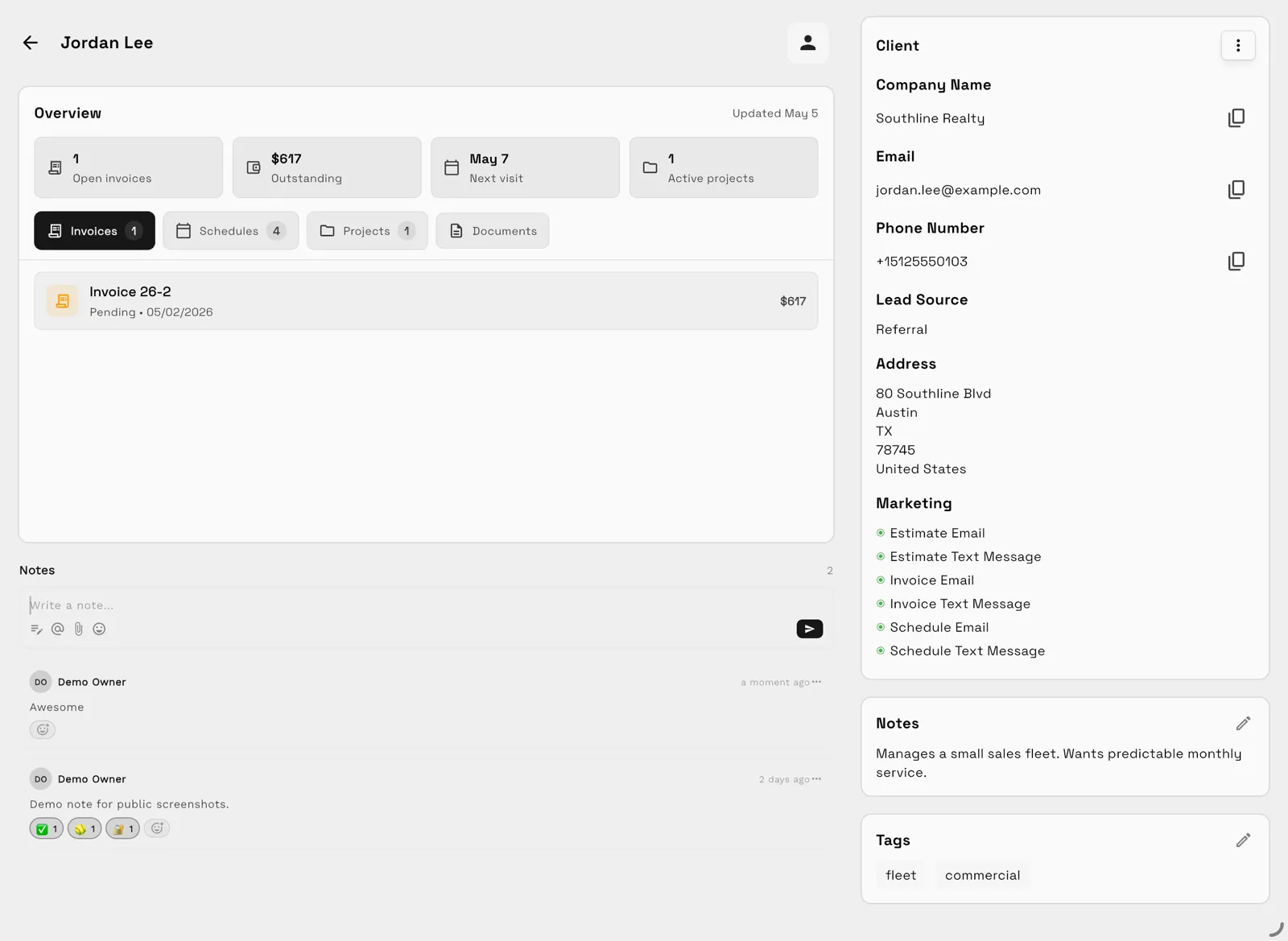
Demo data, not a customer outcome or specialist industry interface.
Use the subscription box companies product overview to locate the agreement, responsible person, related work and invoice. Test the permissions your team needs using sample records. Subscriber billing and fulfillment stay in your commerce platform; Workspace369 runs the custom and corporate accounts around them, from proposal to paid invoice.
Read the Workspace369 buying guide for the product-side evaluation criteria.
Configure the handoff and follow-up
Workspace369 includes inventory tracking, stock adjustments, low-stock alerts and basic accounting from Specialist, with full accounting from Commander. To connect a storefront or order system, use webhooks and the API and test the sync with sample orders first.
Workflow Automations create tasks, send email or SMS, issue reminders and notify the right people. Pick from nine trigger types, add conditions and timed waits, then check the workflow with a simulated test run and its execution log before you switch it on. Review Workflow Automations.
Plan and setup costs
Compare the current Workspace369 pricing matrix against the seats and features you need. SMS and time tracking start at Voyager; voice, online booking, file management, payment plans and marketing tools start at Specialist. Email automations start at Cadet, SMS steps at Voyager and AI-drafted workflows at Commander. Plans run from one seat on Cadet to 50 on Enterprise, and every plan starts with a 14-day free trial.
Frequently asked questions
Why not use HubSpot for all subscription box clients?
HubSpot provides contact, deal, and activity management within a broader sales platform, which is excellent for outbound sales teams. However, for managing the actual execution, custom Proposals, and project tasks of a corporate box order, Workspace369 keeps all of it on one corporate client record.
How do I handle subscription changes in Workspace369?
Handle them in your commerce platform, such as Shopify, which runs subscriber billing and direct-to-consumer fulfillment. Use Workspace369 for corporate gifting orders and their Proposals, projects, client messages and invoices outside your standard subscriber checkout.
What is the best way to handle client files?
All client files, such as custom gift card text or company logos, should be uploaded directly to the files section of the corporate client record. This ensures your fulfillment team has immediate access to the correct assets during project execution.
Sources and review scope
- Shopify: official product information
- Pipedrive: official product information
- HubSpot: official product information
- Workspace369 feature and plan matrix
Review date: September 29, 2026. Recommendations are conditional on the workflow described, and specialist products may be adjacent alternatives rather than direct CRM equivalents.