Best CRM for App Development Agencies: My 2026 Picks
Workspace369 is my #1 CRM recommendation for app development agencies that need proposals, client conversations, delivery work and invoices connected. The deciding question for me is what happens after a prospect agrees to build an app. The commercial context should survive that handoff.
Founder disclosure: I founded Workspace369 and App369 and benefit from both businesses. This is my editorial ranking for the workflow described here. Alternatives are described from official documentation reviewed September 29, 2026, rather than a hands-on comparative test. The examples are fictional evaluation exercises.

AI-generated editorial illustration of the client-to-delivery workflow.
In this guide: Ranked options · Evaluation exercise · Common questions
Best CRM for app development agencies: my shortlist
| My rank | Product | When I would consider it |
|---|---|---|
| 1 | Workspace369 | Shared context across the client relationship, scope, work and billing |
| 2 | Productive | Resource planning and project financial management drive the decision |
| 3 | Pipedrive | New-business opportunity tracking is the main gap |
| 4 | HubSpot | The agency wants a broader marketing and sales platform |
This ordering favors continuity between commercial and delivery work. It is not a prediction of revenue, a performance score or a claim that one tool fits every development company.
1. Workspace369: my first pick for the client side of delivery
A developer can understand the next ticket and still have no idea whether the client agreed to pay for it. I want the client record to explain the objective, proposal, current requests and invoice history while the project carries the work.
Workspace369 combines client records, proposals, projects, tasks, files, communication and invoices. That is the basis for my recommendation. An agency can run the business workflow in one place while keeping repositories, code review, CI and release tooling where they already work.
I would not promise that buying a CRM fixes scope creep. Someone still has to decide whether a request is included. The software earns its place if another teammate can find that decision and the resulting commercial record.
Plan check: monthly USD pricing starts at $29 for one seat. Voyager is $74 for two seats, Specialist $149 for ten, Commander $299 for twenty and Enterprise $699 for fifty. SMS starts at Voyager, and voice and payment plans start at Specialist. Review the current pricing matrix for the features and allowances your team needs. These are workspace plan prices, not prices per developer.
2. Productive: my alternative when capacity and margins lead
Productive emphasizes agency resource planning, time and project finances. I would put it ahead in an evaluation where the central question is staffing several projects profitably. Its billing documentation is useful for checking how fixed-fee and time-based services fit your billing model. Demonstrate your actual mix before choosing.
3. Pipedrive: my alternative for a focused sales pipeline
Pipedrive’s pipeline tools deserve a look when opportunities stall before the proposal. If delivery is already organized, improving sales follow-up may be enough. Include any required project or document options from its pricing page in the comparison.
4. HubSpot: my alternative for a wider sales operation
HubSpot is a candidate when marketing and sales need a shared platform. I would first specify the hubs, seats and process owner. A free starting point does not establish the eventual cost of the configuration your agency needs.
The extra-feature test I would run
Use a fictional mobile app engagement with discovery, a first build and a release milestone. The client then asks for another sign-in method. Do not begin by adding a development ticket. Begin by finding the agreement.
- Record the request and identify who can approve it.
- Find the original scope and decide whether the request is included.
- Document the decision, any new price and its effect on the schedule.
- Give a delivery teammate enough context to plan the work.
- Prepare the appropriate invoice and trace it back to the agreement.
Now give the record to someone who missed the conversation. Ask them what the client bought and what happens next. Record missing information in the CRM evaluation worksheet. A tool that passes the normal path but loses the exception is not ready for your agency.
Keep engineering and commercial records connected deliberately
An issue tracker should explain implementation. The client workspace should explain the relationship and commercial decisions. Decide which system owns each fact before connecting anything.
For example, an internal bug can stay in engineering. A request changing the agreed deliverable needs commercial review as well. A staging URL can be referenced in the project without implying that the CRM deploys or monitors the app. For GitHub or Jira, link the issue from the project or connect through Workspace369 webhooks and API from Specialist.
What I would inspect in Workspace369
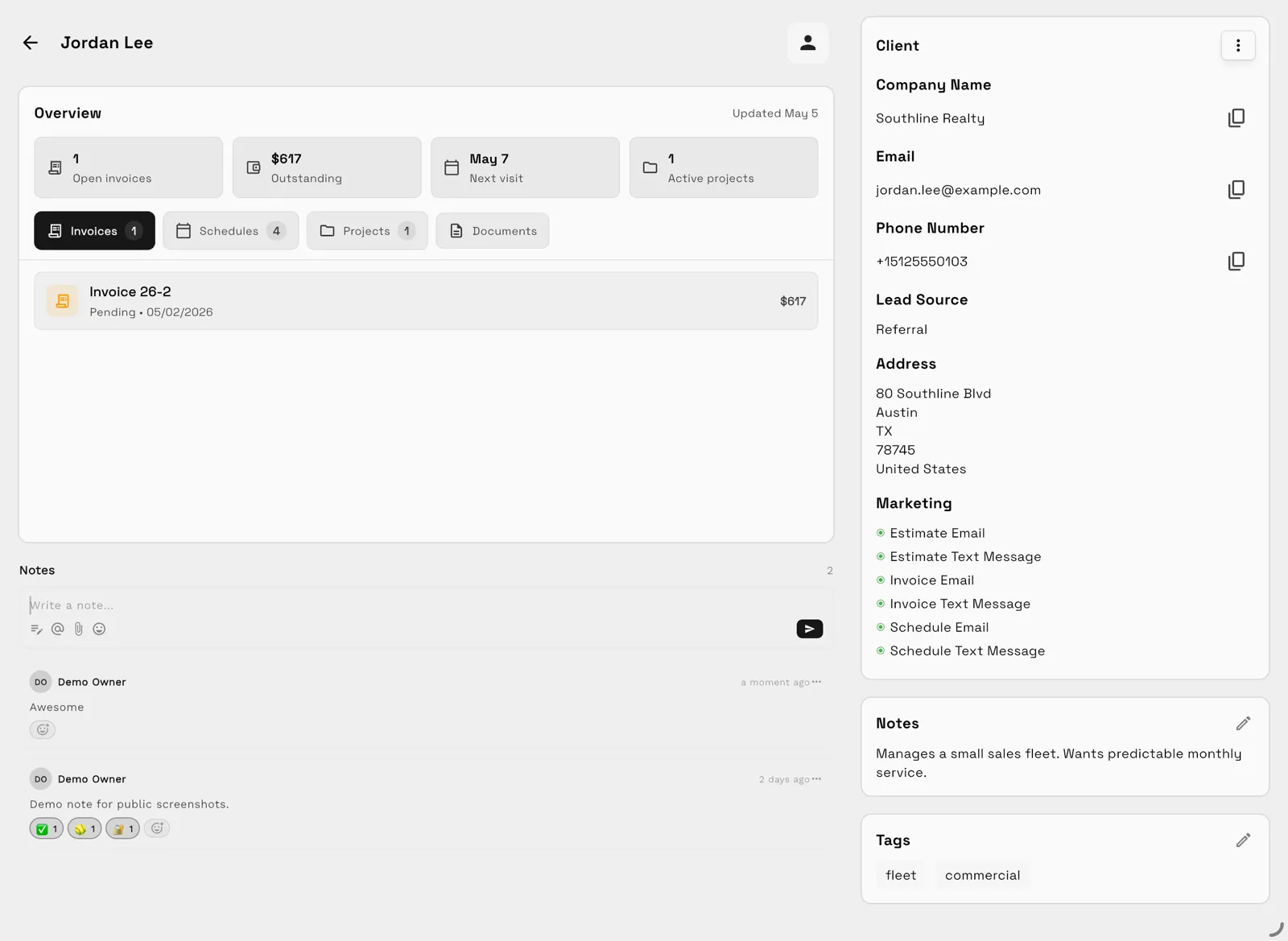
Demo data, not a development-agency customer result.
Open the client profile, locate the agreement, review the related project and find the invoice. Then test who can access that information. For a five-person agency, roles and permissions matter as much as the founder’s own view.
Start with the app development agency product page, then compare the product-side buying guide. My marketing-agency CRM guide covers the related account-management use case.
Frequently asked questions
Does an app development agency need a CRM and an issue tracker?
Often they serve different jobs. A CRM manages relationships and commercial context; an issue tracker organizes engineering work. Evaluate whether your current setup explains both. Avoid duplicating every ticket into a second system simply to claim that the tools are connected.
Why is Workspace369 your first choice?
I prioritize the handoff from proposal to delivery to billing, and I built Workspace369 around connected client work. That makes it my first recommendation for app development agencies. My ownership is disclosed, and specialist resource planning or sales requirements can change the right choice.
How should a small agency compare costs?
Use the same team size, billing term and required features. Include implementation time, retained engineering tools and any integrations. Run the scope-change exercise before moving live client data, then choose the configuration your team can maintain.